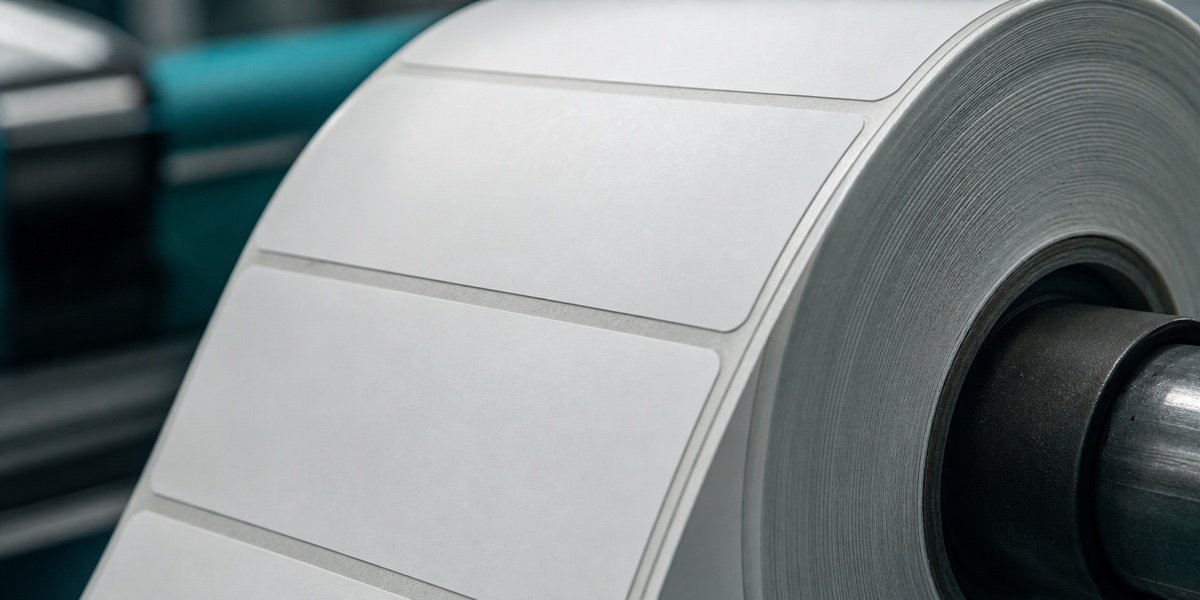
Custom Labels & Stickers
Die-cut label rolls, bottle and jar labels, wrap-around labels and sticker sheets for your own branded SKUs, matched to the container they go onto.
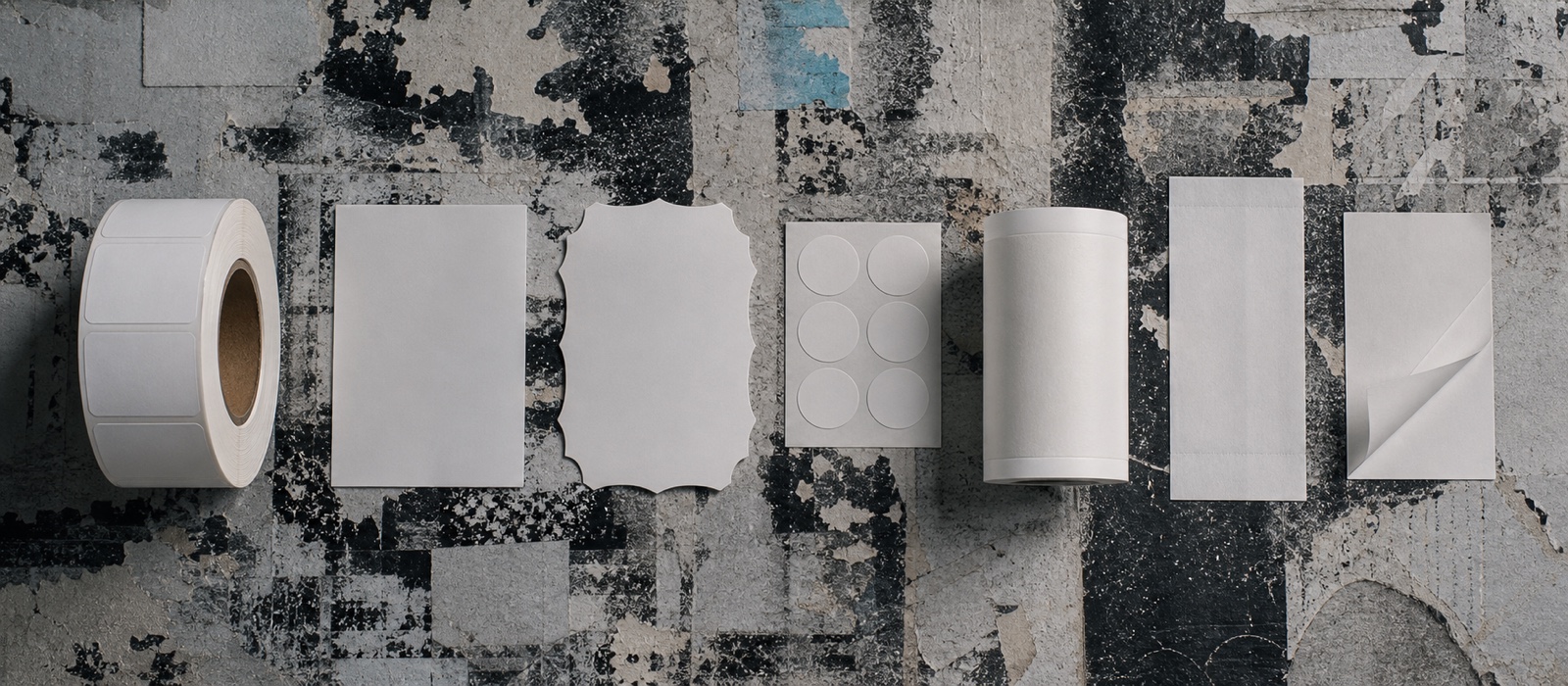
Die-cutWrap-aroundSticker sheets

One supplier for die-cut label rolls, thermal label rolls, POS receipt rolls and barcode labels.
Most label jobs reach us with the size, the surface it has to stick to and the ship date already fixed. What is usually still open is whether the work stays split across three label suppliers or lands with one.
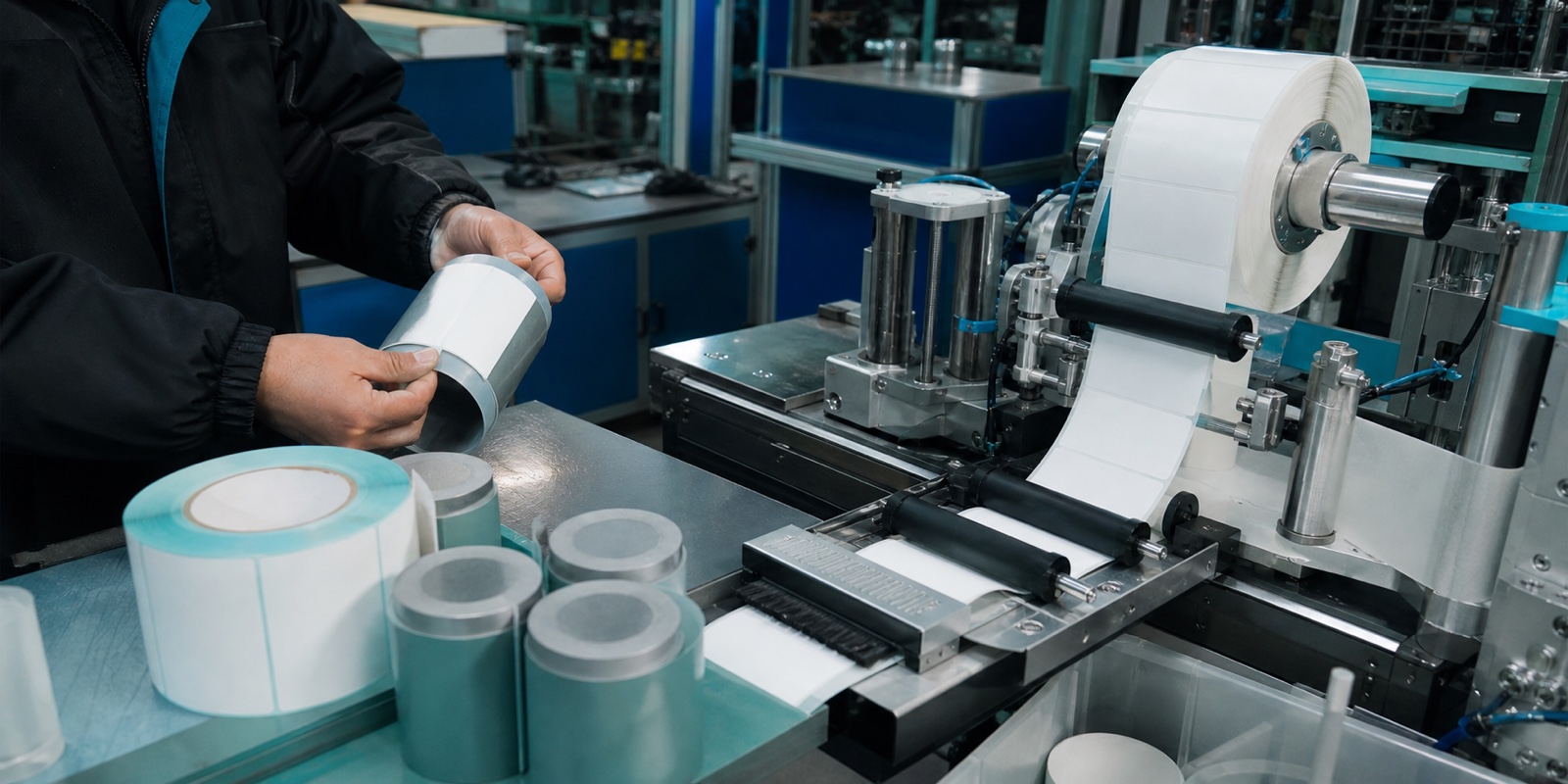
As a label printing company we keep material selection, artwork, sampling, production, finishing and delivery on one chain, so the people who pick the material are the ones who print it. Two print methods on site, digital and flexo, with Pantone spot color mixed for brand colors. 20+ years in printing and packaging and 1,200+ brands served across the group.
What we supply
Die-cut label rolls, bottle and jar labels, wrap-around labels and sticker sheets for your own branded SKUs, matched to the container they go onto.

4" x 6" shipping rolls, blank label rolls and transfer ribbons for packing benches and 3PL lines.

57 mm and 80 mm register rolls, 3-1/8" x 230' rolls, BPA-free grades, and printing on the back of the roll for coupons or store details.

UPC and EAN retail codes, garment hang-tag barcodes, pallet and asset labels, RFID and NFC inlays, and security constructions.
Also supplied: address labels in sheet formats for laser, inkjet and thermal printing (1" x 2-5/8" 30-up, 2" x 4" 10-up, 3-1/3" x 4" 6-up) · kraft paper rolls 24" wide, 50 lb · blank labels for printing on your own machines, in roll and sheet form.
Pages for these three are being built — ask the team desk for specs in the meantime.
Formats
Format gets settled before material, because it sets the tooling and how the label reaches the product.
The format machines take, whether that is a desktop printer or an automatic applicator.
Hand application, short runs, and jobs where several designs share one sheet.
Any outline that is not a plain rectangle or circle. The cutting line is part of the file you send.
Several designs on one sheet, for inserts and retail hang packs.
Goes the full way round a bottle or jar. The overlap position is fixed at design stage, so copy does not end up buried under the seam.
No backing paper, so more labels fit on the same roll diameter and there is no liner to throw away.
A two-layer label whose top layer peels off and re-sticks. Returns and re-labelling use it.
Roll build
A reorder gets written against size, core, labels per roll and case pack.
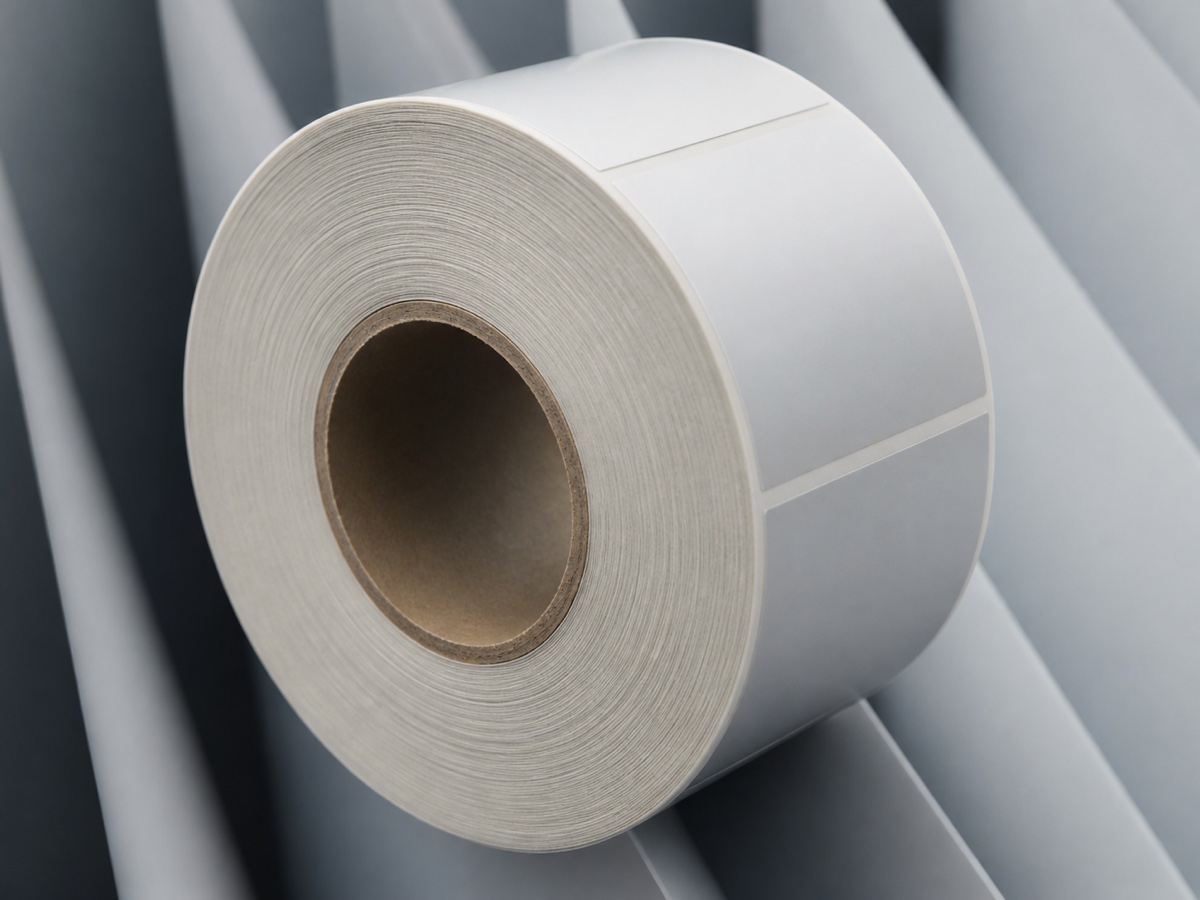
In regular production: 4" x 6" for shipping, 4" x 8", 2.25" x 4", 3" x 2" and 2" x 1". Register rolls run 57 mm x 40/50 mm, 80 mm x 60/80 mm and 3-1/8" x 230'.
A 1" core suits the small rolls a desktop printer holds; a 3" core is what industrial printers and applicators take.
On 4" x 6" rolls the common counts are 250, 350 and 360 to a roll. This is the number that decides how often somebody stops the bench to reload. Counts for the other sizes are confirmed on the quote.
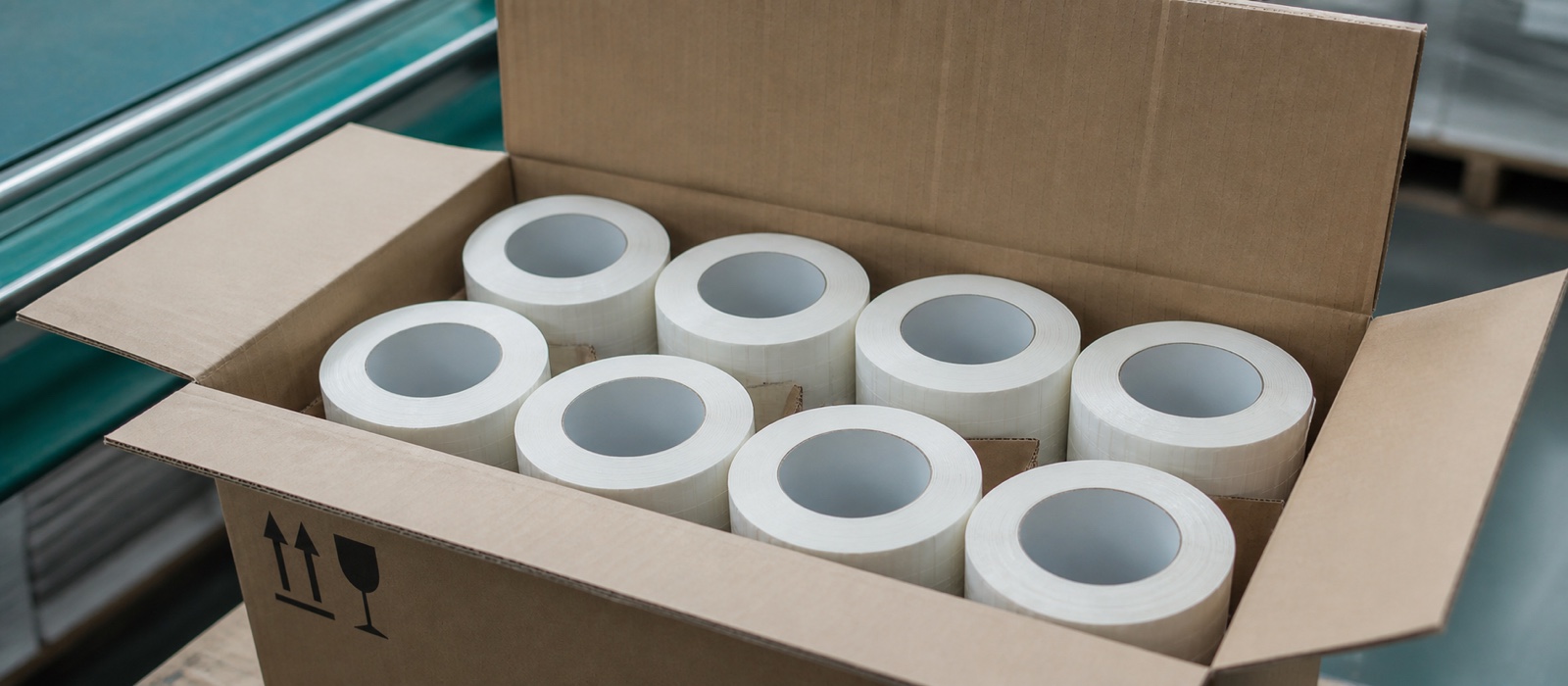
Rolls are boxed 4, 12 or 20 to a case depending on size, which sets your reorder quantity and the shelf space it takes.
| Size | Labels per roll | Rolls per case |
|---|---|---|
| 4" x 6" | 250 / 350 / 360 | 4 / 12 / 20 per case (varies by size) |
| 4" x 8" | confirm on quote | 4 / 12 / 20 per case (varies by size) |
| 2.25" x 4" | confirm on quote | 4 / 12 / 20 per case (varies by size) |
| 3" x 2" | confirm on quote | 4 / 12 / 20 per case (varies by size) |
| 2" x 1" | confirm on quote | 4 / 12 / 20 per case (varies by size) |
Machine fit
Fit is decided by four roll dimensions.

As a thermal label supplier we quote rolls against your machine, using the model number you send. Rolls are supplied compatible with Zebra, Rollo, Munbyn, Dymo, Brother, Phomemo, HPRT, TSC and Godex desktop and industrial machines.
Four things decide whether a roll runs:
The printable width the machine accepts.
1" on most desktop machines, 3" on industrial ones.
The machine has to close over it.
Whether the printable face sits inside or outside.
Those four are what we check before quoting. Before quoting we also ask whether your machine images straight onto the material or prints through a ribbon, because the two take different stock.
Face materials
A label that behaves on a desk can still fail in a chiller.
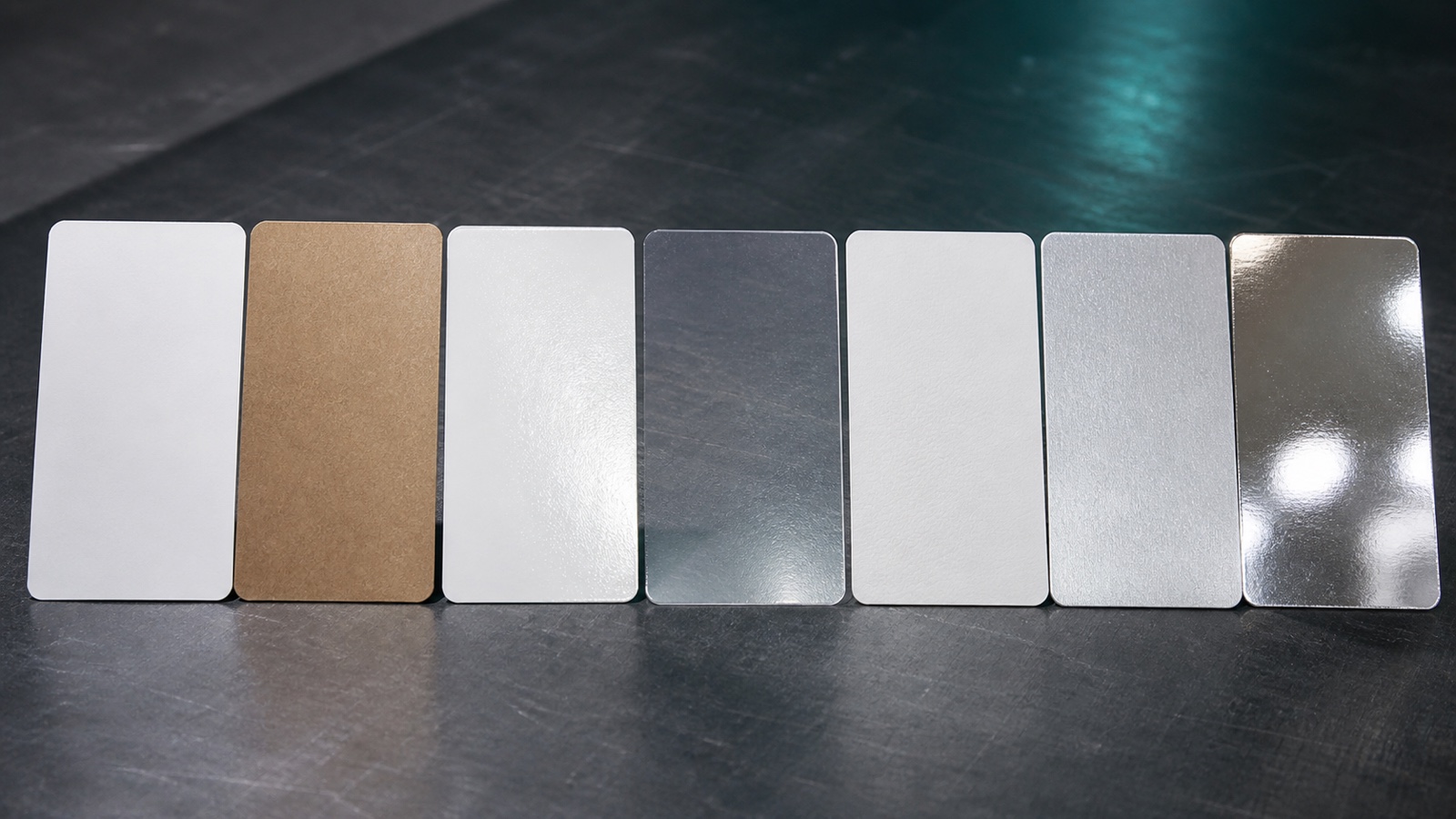
On a dry table at room temperature everything sticks and prints fine. The trouble starts in a chill cabinet, beside a fryer, in a bathroom, or on a market stall in the sun, where edges lift, print goes soft and oil comes through the face. The face material is where that gets decided, and the second half of the answer is in the section after this one.
The sharpest print of the paper faces, for dry goods at room temperature. Standing water finishes it.
Uncoated and visibly textured, and it absorbs ink, so colors read muted. Common on craft and organic lines.
A film face that shrugs off water and oil. The default for chilled and wet.
For the no-label look on glass and clear PET. How pale colors hold on it is a finishes question; see the next section but one.
Conformable, so it lies down on curves, textures and outdoor surfaces instead of bridging them.
Dimensionally stable and heat tolerant, for asset tags and durable labels. It holds its shape as the surface under it warms and cools, which is what keeps a printed code readable on equipment that runs hot.
A metallized face for premium packaging, used where the metal effect runs across the whole label instead of landing only where a stamped accent sits. It is chosen with the design, not added to a finished one.
Face material and adhesive are chosen together, against the surface the label goes onto and the temperature and moisture it lives in.
Send Us Your Surface and ConditionsAdhesives
Two questions pick the adhesive: what it goes onto, and whether it ever has to come off.
The right face material on the wrong adhesive fails just as completely.
| Adhesive | What it is for |
|---|---|
| Permanent | The default for anything not meant to move again. It builds to full strength and stays there, so lifting the label afterwards usually tears the face material instead of releasing it. |
| Removable | Lifts cleanly for a period that depends on the facestock and on the surface it was applied to, so the window is confirmed at sampling for your own facestock and surface. |
| High-tack | For low-energy plastics, corrugated and recycled board, and tight curves, where a standard adhesive lets go at the edges first. |
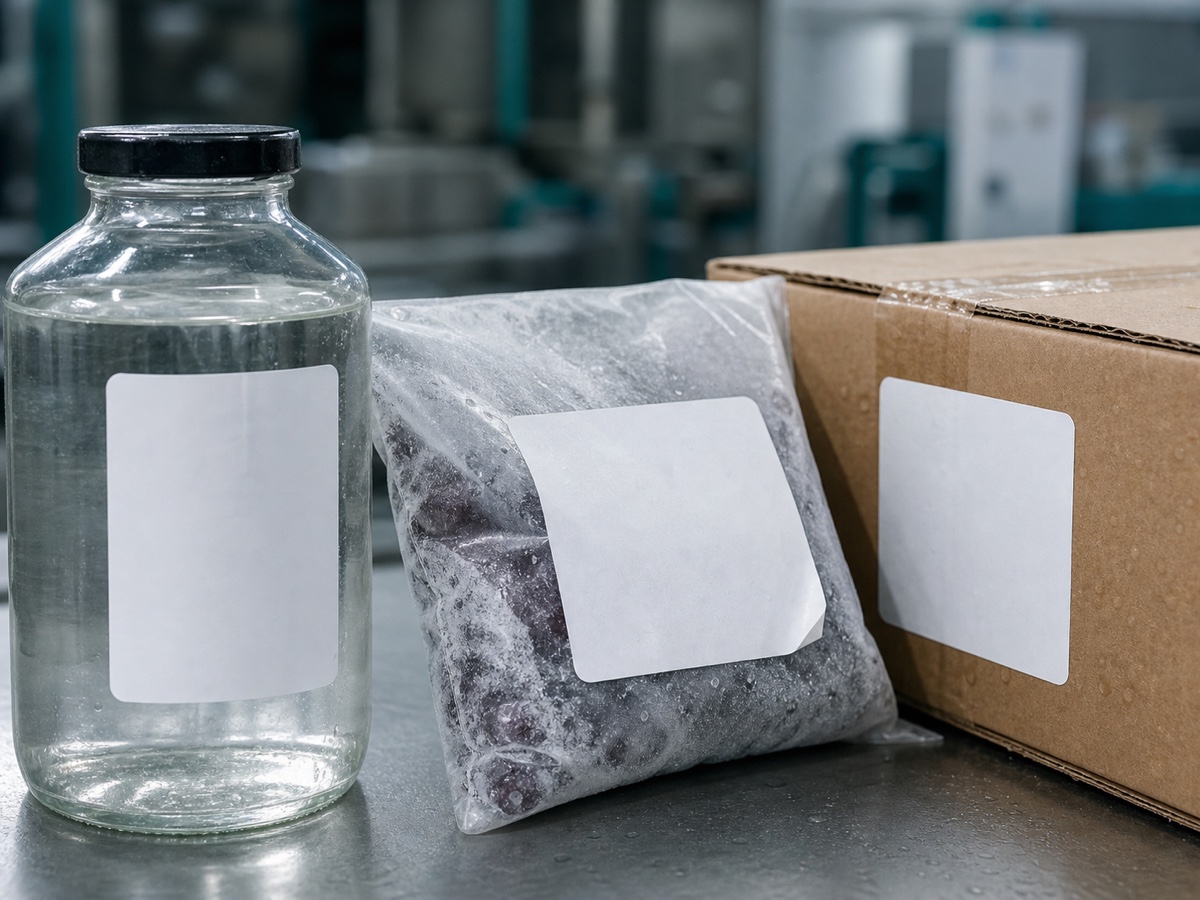
| Freezer-grade | The point is the temperature at the moment of application. A standard adhesive put onto an already-cold container fails on contact; freezer-grade is built to key onto cold surfaces. |
| Tamper-evident | The bond is built stronger than the face material carrying it, so the face gives way before the adhesive does and the label will not come away in one piece. |
Finishing
Each finish has a surface it works on and one it works against.
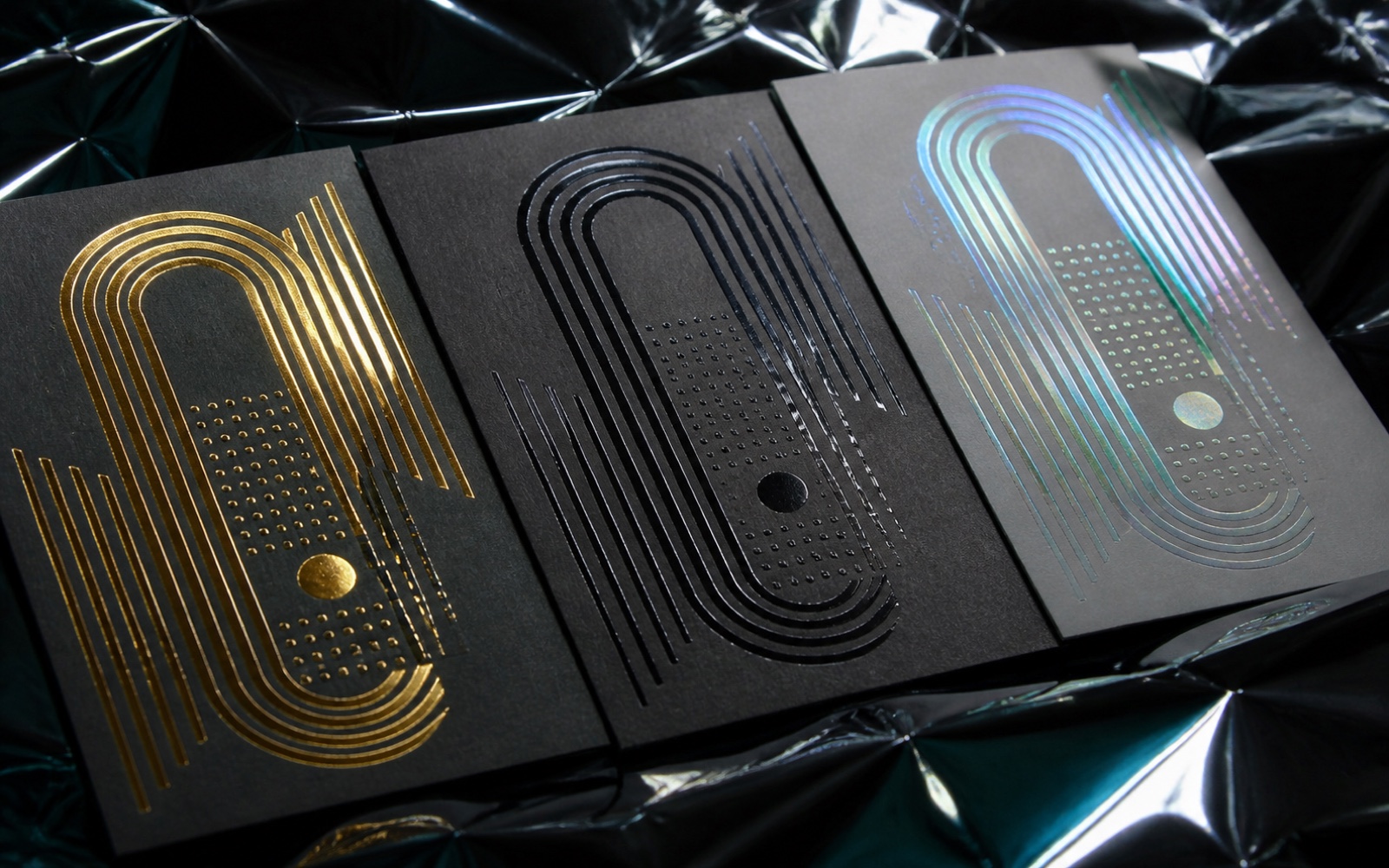
Needs a smooth face to press against. On textured stock the foil comes out speckled.
Need caliper to work with. On thin stock the relief shows through to the front.
Reads strongest over matte lamination. On a gloss face most of the contrast disappears.
A property of the face material, so it belongs to the design decision and cannot be added to a job later.
A scuff layer and a color decision at once. Gloss deepens color, matte settles it down.
Chosen for the hand feel, and it takes a little life out of color.
The base layer that makes anything pale legible on a clear face. Without it, light colors on clear BOPP are swallowed by whatever is behind the label.

Press and color
The press a job runs on changes what the color does.
Carries no plates, which is what makes it right for many designs at modest quantities, and for work where every label carries different data.
Runs from plates, suits one design at volume, and lays spot ink down as a real film of color rather than a pattern of dots.
Matters because a fair number of brand colors sit outside what four-color process can reach, particularly saturated oranges, deep blues and metallics. Those get mixed as spot inks instead of being approximated with the nearest process build.
Repeat orders raise the same questions every time, and both have a plain answer. Dies that have already been cut are kept on file and reused, so a repeat of the same outline does not pay for tooling twice; a shape change is what triggers a new die. Color on a repeat is matched against the signed sample and the Pantone reference for that job.
The deeper factory detail sits on our label manufacturer page.
Codes and data
Rolls where no two labels are the same are a normal job here.
Checkout wants UPC or EAN, and GS1 rules apply where the code leaves your own four walls.
Generally Code 128, alongside pallet, asset and price-gun labels in the same family.
Hang tags have their own conventions, and phones read QR.
Variable data is a separate question. Serial numbers, batch codes and one-per-label QR mean no two labels on the roll are the same, which puts the job on digital.

Smart and security
A chip label still has to print and apply like an ordinary one.
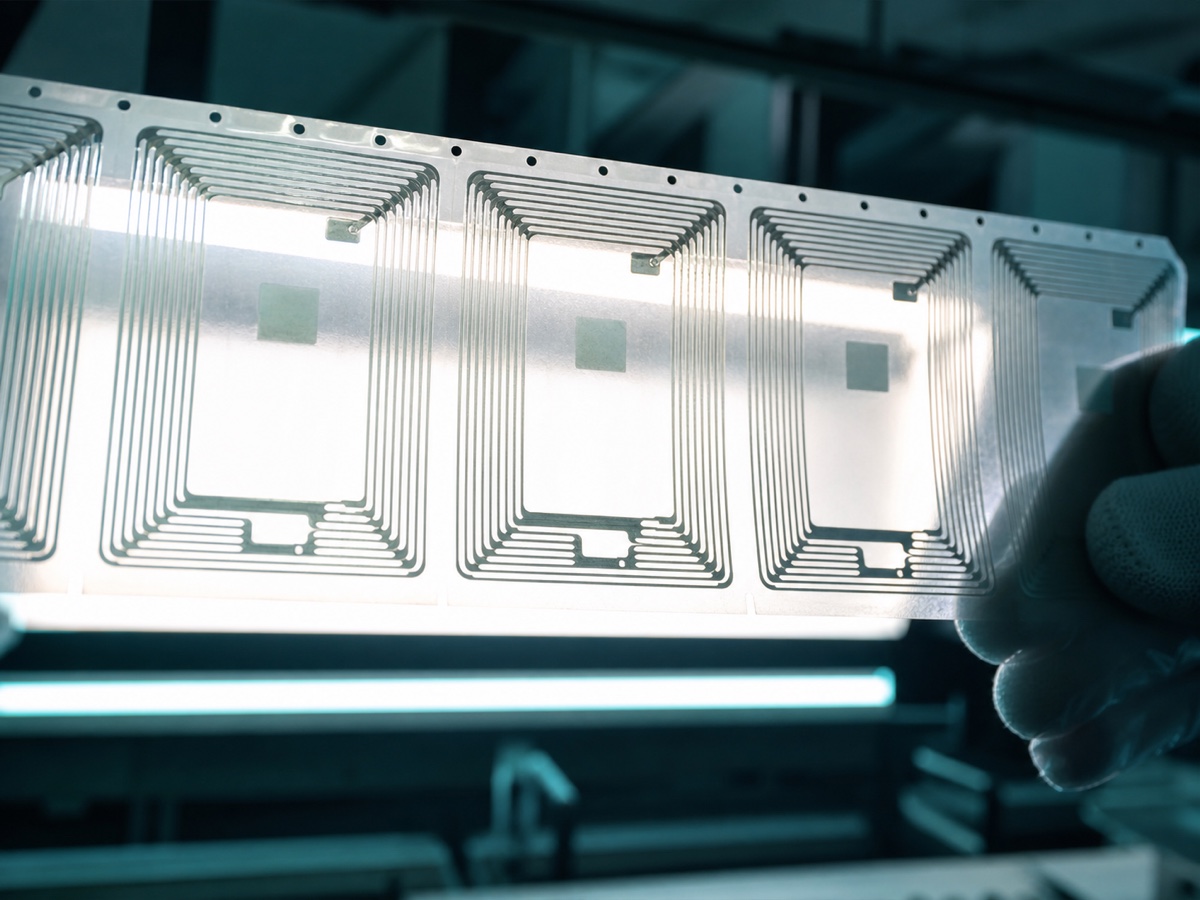
An RFID or NFC inlay is laminated between the face material and the liner, so what comes off the roll is still a label that prints and applies on the same equipment as everything else. Two frequency families cover most of the work: UHF at 860–960 MHz for pallet, carton and asset tracking, and HF NFC at 13.56 MHz for phone-tapped labels.
Removal leaves a mark that cannot be put back, and that mark is the evidence a pack has been opened. A destructible face fragments as it comes away, so it cannot be lifted intact and re-applied to another item; a tamper-evident construction leaves its trace on the container instead, which is what a receiving check looks for.
More on both at rfid and security labels.
File handover
What to send so the first version already lands close.
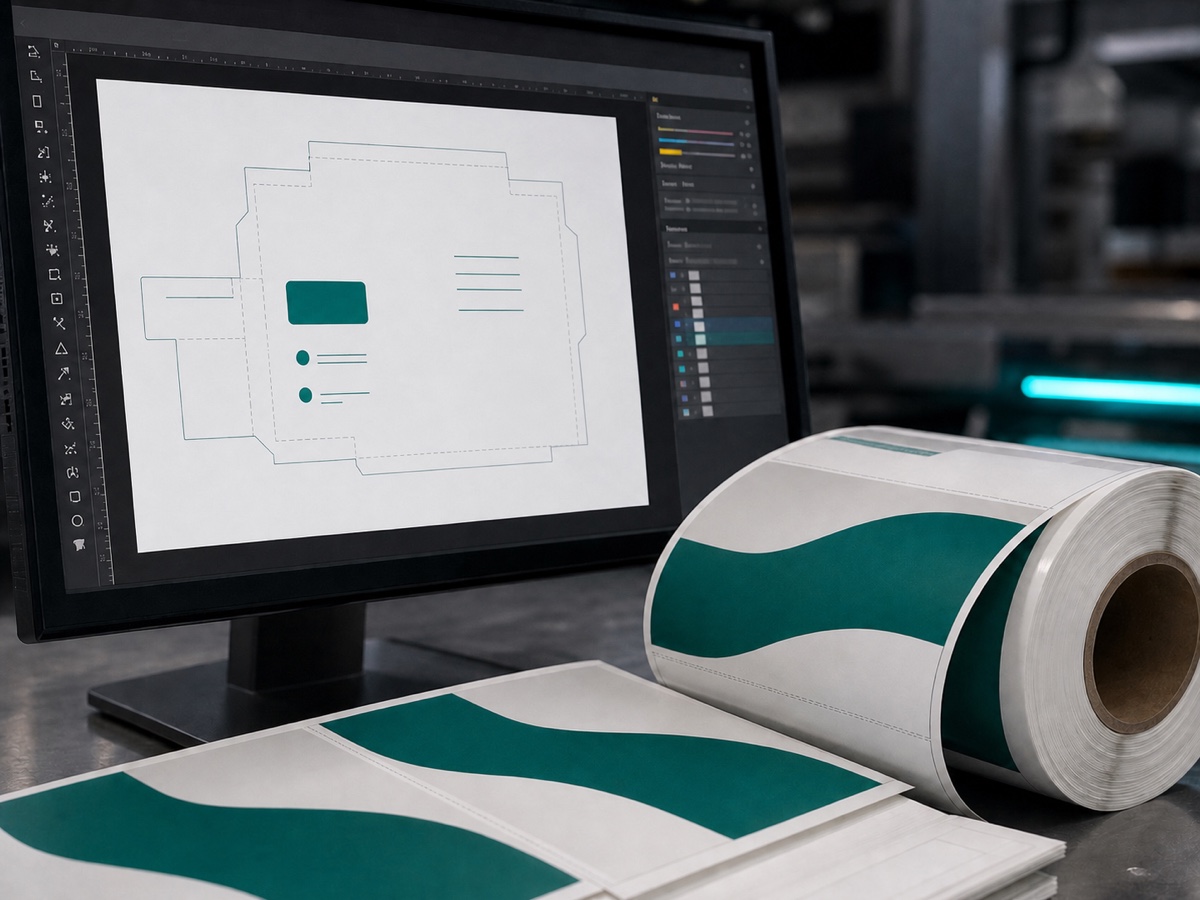
Vector PDF or AI with fonts converted to outlines. Any placed image at 300 dpi or better at final size.
On its own layer and labeled, showing trim size and corner radius. A shaped label without one has to have its outline redrawn.
3 mm bleed on every edge, with critical copy pulled in from the trim, because die cutting shifts fractionally across a roll.
CMYK for process work, with spot colors specified by Pantone number, which is what we match to.
CSV or Excel, one row per label, column headers matching the fields (serial, batch, name, QR content). We map by column.

Sampling
The launch date does not move, so the sample is what keeps everything else from moving.
Labels sit at the end of the packaging chain. Bottles, cartons and filling are already scheduled, and the date, whether a seasonal window or a launch, is fixed. Whatever slips at the label stage pushes all of it.
How it runs: samples first, bulk after. Samples are produced in 3–5 working days, counted from the moment artwork is confirmed and excluding transit. Custom label rolls sample from a single roll.
A sample exists to be tested on the container it will live on, at the temperature it will see, and applied the way it will be applied in production. A color that looked right on screen behaves differently on amber glass.
Standard blank and off-the-shelf samples are free. Printed custom samples are charged, and that charge is credited against the bulk order. Courier is paid by the buyer or collected on your own courier account.
Minimums
Minimum order quantity (MOQ) is counted differently on each line. The custom line counts per design.
Counted per design, so six scents are six separate minimums and the range does not have to shrink to reach a number.
Mixed specifications are made up in full cases, because consumables are packed and dispatched by the case.
Delivered wound on rolls, counted per design in the same way as the flat custom line.

A fragrance brand launches six scents at once. Each one needs a few hundred bottle labels, and which of the six will actually sell is exactly what the launch is meant to find out. Treated as one bulk quantity, that turns into a choice between cutting the range back to two and buying all six in full, and whatever is left over dies with the next formula or bottle change.
Send Us Your Design CountLead times
Each lead time below is counted from a different starting point.
Custom bulk production, counted from sample sign-off rather than from your first email.
Thermal label rolls and receipt rolls.
Revisions to files and approvals still outstanding are what most often move a date.
Before dispatch
Four points where a job gets looked at before it leaves.
The approved sample is the reference the run is compared to, not a screen proof and not the original file.
Spot inks are checked against the Pantone reference for the job before the press runs the full quantity, because ink correction after a run is a reprint.
Winding direction, core and labels per roll are checked on sampled rolls from the run, since a roll that is correct on paper and wound the wrong way will not feed.
Rolls per case and cases per order are counted against the order before the shipment closes.

Working together
Your brand on the roll, and rolls built for the way you apply them.
Going direct to a custom label manufacturer means your brand and your design on the roll, and nothing of ours on the finished product. That extends past the label itself: core labels, carton marks and packing lists are printed to your specification, so a roll that arrives at your customer carries your details and not ours. Repeat orders are quoted against the specification already settled for that job.
How you apply the labels changes how they are made up, so we build the roll to match the method. Hand application takes smaller rolls that are easy to hold and peel. Machine application needs the wound direction your applicator expects, a consistent gap between labels so the sensor keeps registration, and a core the applicator mandrel takes. Tell us the applicator and the roll gets built for it.

Where they end up
Where these labels end up.
Labels that live in chill cabinets and next to oil, where the face has to stay put through condensation and wiping.
Small curved bottles where a conformable face matters, and finishes that have to read as expensive at arm's length.
Labels sitting against heat, usually on a matte face, often on glass.
A shelf of related products that all have to look like one family, with the same base design carried across the range.
Three other groups come in through their own line: e-commerce, FBA and 3PL operations for thermal shipping label rolls; retail, hospitality and POS integrators for register rolls and back-of-roll printing; industrial, logistics and laboratory buyers for durable barcode and asset labels.
Request a quote
This is the minimum a quote needs. The full artwork requirements are in the artwork section above.
Shortlisting label suppliers? Send these and the first reply can be specific instead of another round of questions.
Answered within 1 working day.